Lateral diastasis is a rare and still under-recognised condition of the abdominal wall.
Unlike classic rectus diastasis, which affects the midline, lateral diastasis mainly involves the region of the semilunar lines, that is, the junction between the rectus muscles and the lateral abdominal muscles (the transversus, internal oblique and external oblique muscles).
It may present with
- 01lateral bulging
- 02loss of waist definition
- 03asymmetry of the wall
- 04a feeling of reduced core stability
Lateral diastasis often coexists with midline diastasis and can go unnoticed if attention is focused only on the linea alba.
A rare condition that must be looked for
Lateral diastasis is not yet included in a structured way in the main classifications of rectus diastasis, and the available literature is still limited.
For this reason it should not be diagnosed simply by looking at the shape of the abdomen.
A lateral bulge can in fact depend on very different conditions:
- semilunar line diastasis
- lateral or Spigelian hernia
- musculofascial laxity
- difference in tone between the two sides
- previous surgery and denervation
- distribution of adipose tissue
- wall changes associated with midline diastasis
Diagnosis must therefore be accurate.
Dynamic ultrasound
When assessing lateral diastasis, a static examination may not be sufficient.
It is useful to observe the wall during contraction, the Valsalva manoeuvre and changes in intra-abdominal pressure, because the defect may become evident mainly under strain.
This is why dynamic ultrasound of the abdominal wall is one of the most useful tools to:
- 1assess the semilunar line
- 2compare the two sides
- 3observe how the wall behaves during exertion
- 4distinguish diastasis from a hernia
- 5check for any association with rectus diastasis
- 6assess muscle trophism
- 7plan treatment correctly
In more complex cases, the assessment may need to be completed with CT or other imaging.
Why the midline and lateral walls must be assessed together
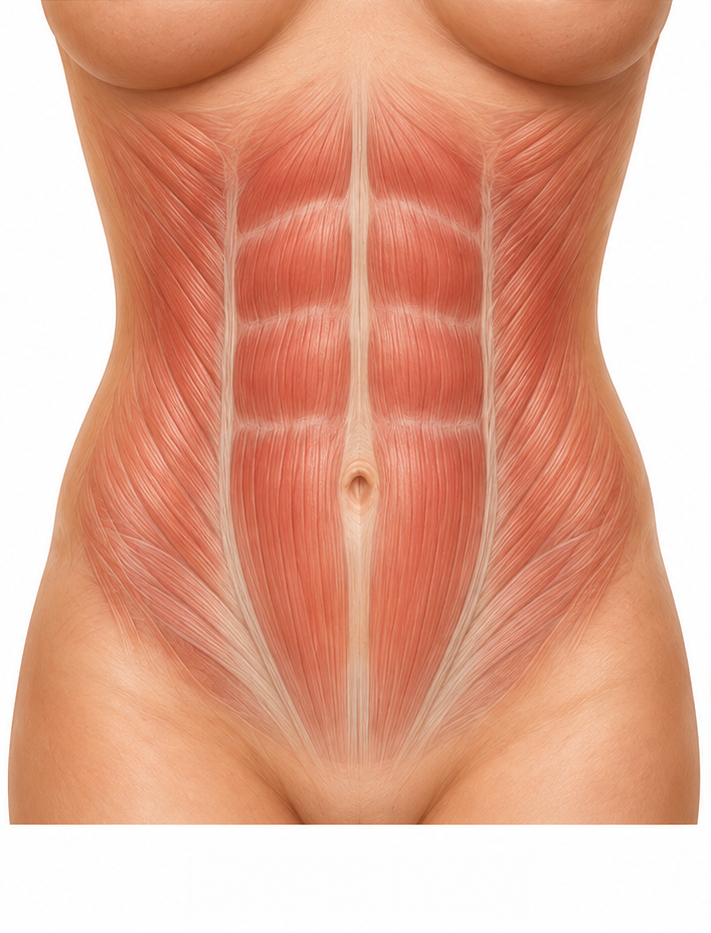
The abdominal wall works as a single system.
The linea alba, the rectus muscles and the lateral muscles do not work separately: tension is transmitted through a continuous fascial system.
When both midline and lateral diastasis are present, treatment must be planned taking both into account.
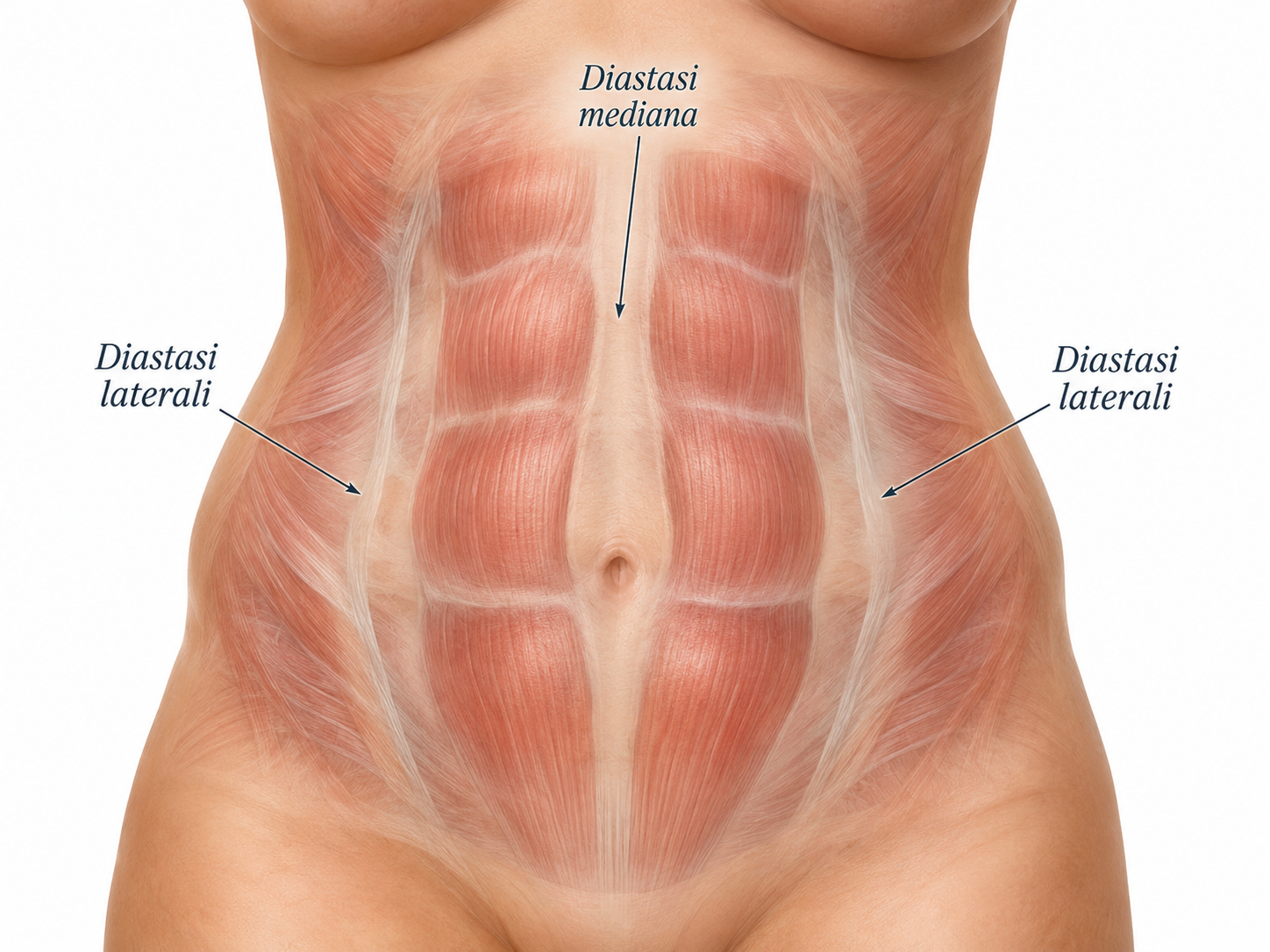
When the defect is combined, the reconstruction must be combined too.
How are they treated when they occur together?
There is no single technique.
The choice depends on:
The common principle is to bring the lateral muscles back towards the midline and restore proper tension in the wall.
This can be achieved through different strategies.
Medialisation through the posterior compartment
Some techniques that reconstruct the posterior compartment pull the lateral muscles towards the midline, also repairing lateral diastasis.
Anterior compartment plication
Another option is to correct the lateral component directly through plication of the anterior compartment, recreating tension along the semilunar lines.
Some midline reconstruction techniques also indirectly correct the lateral component
When midline diastasis is associated with a lateral component, some reconstructions that work extensively on the posterior compartment can already produce significant medialisation of the lateral muscles.
This is one of the reasons why the choice of technique should not be based solely on the width of the central diastasis.
Retromuscular and extraperitoneal techniques such as miSAR®, p-miSAR®, v-TAPP and peTEP reconstruct the posterior compartment, and this mobilisation allows the lateral myofascial complexes to be brought towards the midline.
Visually, this can result in better waist definition, because the lateral wall is brought back to a more medial and physiological position.
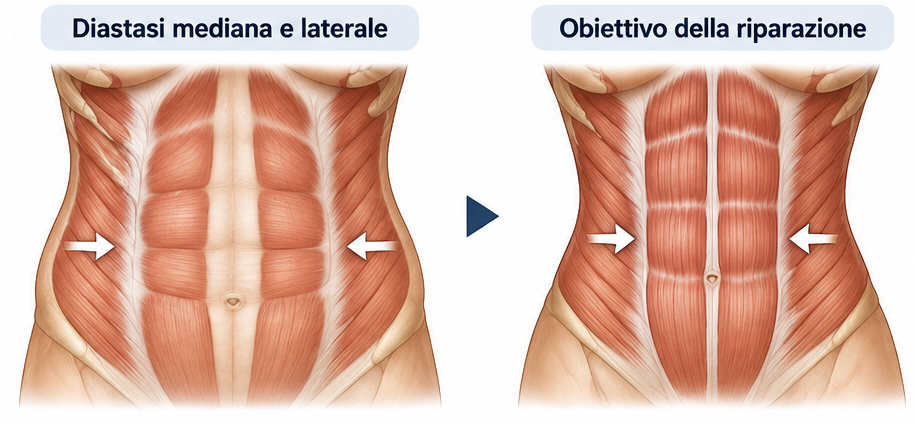
In selected patients, medialisation of the lateral muscles can help redefine the abdominal profile and the waist.
Explore the techniques
The key point
Lateral diastasis is rare, but when present it changes how surgery is planned. This is why it must be looked for, studied dynamically and treated together with midline diastasis when the two conditions coexist.
FAQ
What is lateral diastasis?
It is an alteration of the abdominal wall affecting the lateral regions, particularly the semilunar lines, and it can be associated with classic rectus diastasis.
How can I tell if I have lateral diastasis?
It may present as lateral bulging or asymmetry of the abdomen, especially during exertion. Diagnosis nevertheless requires a specialist assessment.
Can it be present together with rectus diastasis?
Yes. The two conditions can coexist and, in some patients, both must be considered when planning treatment.
Is surgery always needed?
No. The choice depends on the extent of the defect, the symptoms and the functional or aesthetic impact.
Do you have a lateral abdominal bulge, or a diastasis repair you are not satisfied with?
A specialist assessment helps to understand whether the problem concerns only the midline or also involves the lateral wall.