Rectus diastasis and umbilical hernia are two different conditions, but they often occur together.
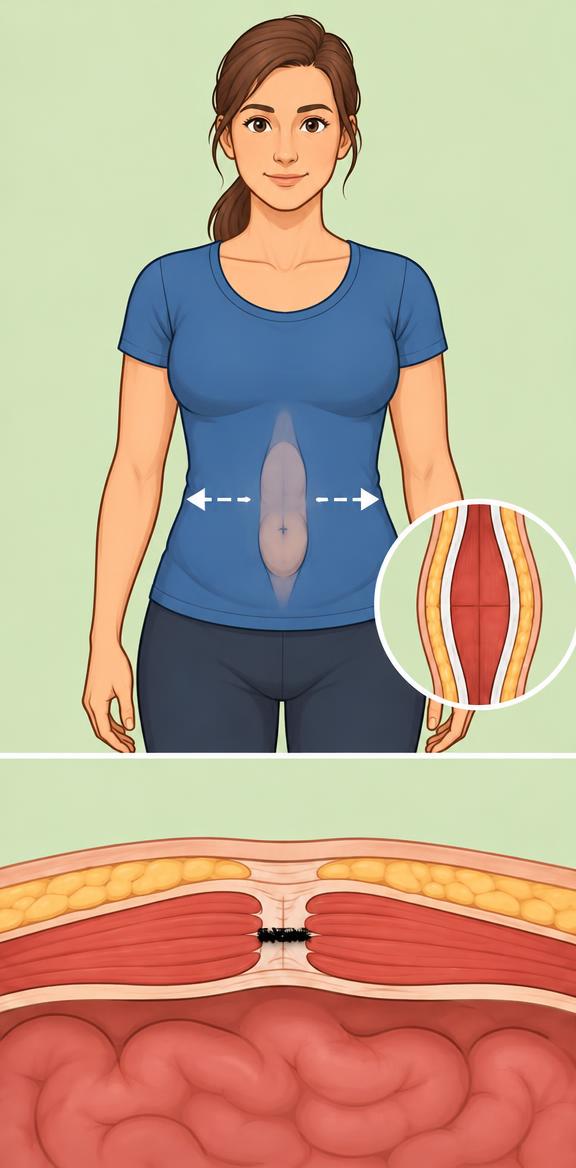
Rectus diastasis
In diastasis the rectus muscles gradually move apart, with widening and thinning of the linea alba.
There is no true “hole” in the wall.
Why do diastasis and umbilical hernia often occur together?
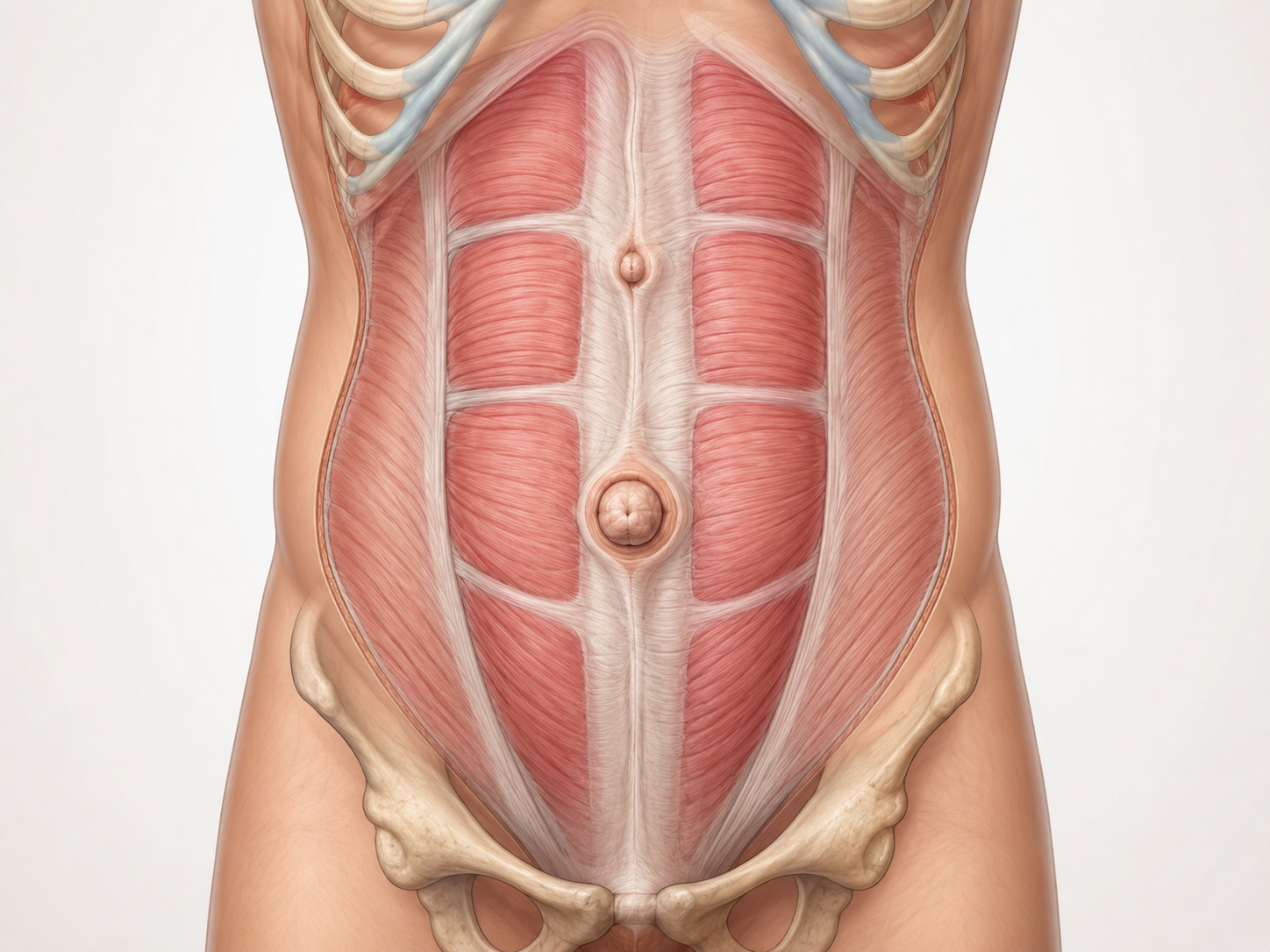
- 01The linea alba is the fibrous structure joining the two rectus muscles along the centre of the abdomen.
- 02When this structure loses tension and widens, as happens in diastasis, some areas can become more vulnerable.
- 03The navel is naturally one of the weakest points of the midline.
This is why diastasis can be associated with:
- umbilical hernia
- epigastric hernia
- multiple small defects along the linea alba
- more extensive loss of continuity of the wall
Is treating the hernia alone enough?
No.
When an umbilical hernia is associated with significant diastasis, repairing only the small umbilical defect may fail to solve the problem and increase the risk of hernia recurrence.
The assessment must therefore include the entire midline:
- 01extent of the diastasis
- 02size of the umbilical defect
- 03presence of other small defects
- 04previous surgery
- 05symptoms
- 06overall characteristics of the abdominal wall
When diastasis and hernia coexist, treatment must be planned for the wall as a whole, not just the navel.
How is the diagnosis made?
Diagnosis starts with a specialist examination of the abdominal wall.
During the examination the following are assessed:
- width of the diastasis
- location and extent
- characteristics of the navel
- presence and size of the hernia
- quality of the fascia
- any other associated defects
When needed, the assessment can be completed with:
- abdominal wall ultrasound
- abdominal CT with Valsalva manoeuvre in more complex cases
When is surgery indicated?
- symptomatic umbilical hernia
- progressive enlargement of the defect
- significant diastasis
- disabling functional symptoms
- pain at the hernia site
- limitation in daily or sporting activities
- progressive worsening of the abdominal deformity
- association with multiple midline defects
One operation for diastasis and hernia?
Yes.
The aim is to reconstruct the midline, bringing the muscles back together and closing at the same time all hernias present along the linea alba.
Which technique is used?
There is no one-size-fits-all technique.
The choice depends on:
Learn more
Aesthetic result
The aim of surgery can be both functional and aesthetic.
Midline reconstruction can improve:
- continuity of the wall
- core stability
- shape of the abdomen
- profile of the navel
When indicated, functional abdominal wall surgery can be combined with various plastic or aesthetic surgery procedures.
Frequently asked questions
Are diastasis and umbilical hernia the same thing?
No. Diastasis is a separation of the rectus muscles along the midline, whereas an umbilical hernia is a true defect of the wall. However, the two conditions can be present at the same time.
Can diastasis and umbilical hernia be operated on together?
Yes. When the two conditions coexist, both the hernia defect and the muscle diastasis can be treated in the same operation, with a strategy tailored to the characteristics of the abdominal wall.
Is miSAR® always indicated for diastasis with umbilical hernia?
No. miSAR® is one of the available techniques. The choice depends on the size of the defect, the anatomy of the wall and the patient's characteristics.
Do you have diastasis associated with an umbilical hernia?
A specialist abdominal wall assessment helps to understand whether the problem involves only the navel or a wider portion of the midline.