Rectus diastasis is characterised by an increased distance between the two rectus abdominis muscles along the midline. It can appear after pregnancy, following major changes in weight or, more rarely, in men.
It does not always cause obvious symptoms. In some patients it is mainly an aesthetic concern, while in others it can be associated with functional changes in the abdominal wall:
Recognising the symptoms and telling them apart from those of a hernia is the first step towards a correct assessment.
How does diastasis present?
One of the most common signs is the appearance of a bulge or swelling along the midline of the abdomen, particularly noticeable during exertion.
It may appear, for example:
- when getting out of bed
- during an abdominal exercise
- when coughing
- when lifting a weight
- when pressure inside the abdomen increases

This sign alone does not establish how severe the diastasis is, but it is a common reason for seeking a specialist assessment.
Feeling of abdominal wall weakness
The linea alba helps transmit forces between the muscles of the abdominal wall.
When it is excessively stretched, some patients may notice:
- reduced trunk stability
- a feeling of a "weak abdomen"
- difficulty performing certain movements
- less effective abdominal contraction
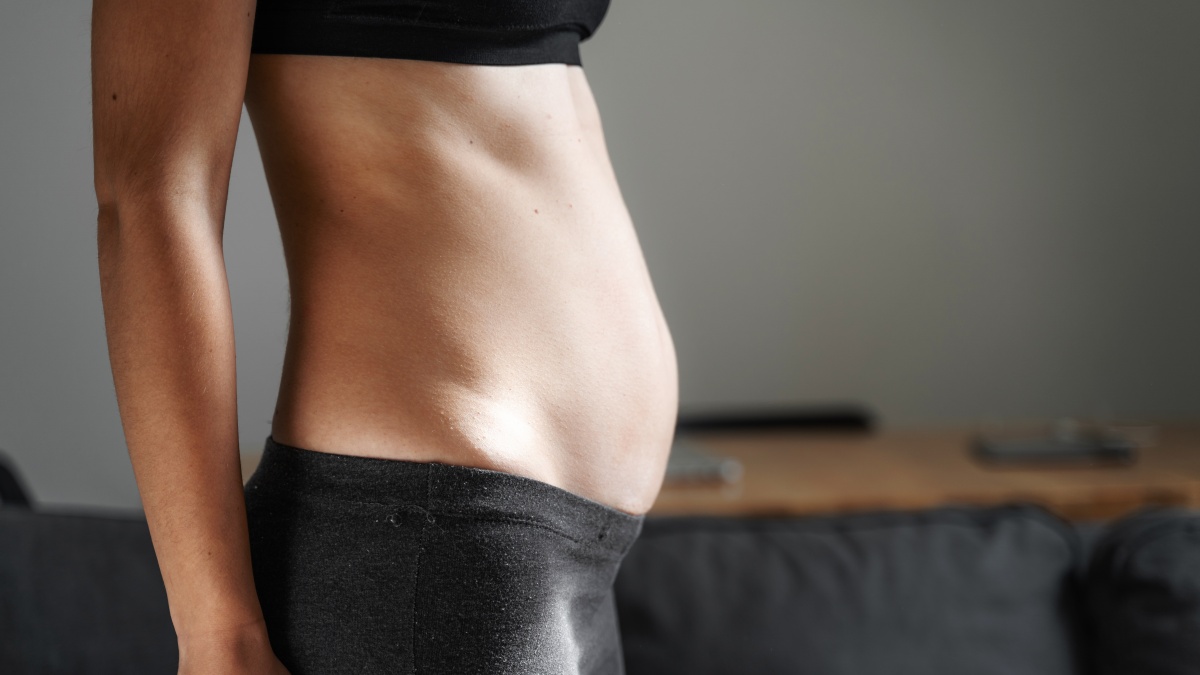
Bloating and increased abdominal protrusion: "why do I still look pregnant?"
Diastasis can contribute to the loss of normal abdominal wall tension and make the protrusion of the abdomen more noticeable, especially at the end of the day or after meals.
Low back pain
The abdominal wall helps stabilise the trunk together with the back muscles, the diaphragm and the pelvic floor.
For this reason, some patients with diastasis may experience:
- low back pain
- fatigue of the back muscles
- difficulty maintaining certain postures
- a feeling of instability during exertion
Low back pain does not automatically mean that diastasis is the cause. The assessment must always be comprehensive and also consider any associated musculoskeletal conditions.
Pelvic floor disorders
The abdominal wall and the pelvic floor work as a coordinated system in managing intra-abdominal pressure.
In some patients, diastasis may be associated with complaints such as:
- a feeling of pelvic heaviness
- stress urinary incontinence, meaning urine leakage when coughing or running
- a feeling of incomplete emptying of the rectum
When these symptoms are present, it can be useful to combine the abdominal wall assessment with an assessment of the pelvic floor.
Diastasis or hernia?
Diastasis and hernia are not the same thing.
The rectus muscles move apart, but a true fascial defect is not necessarily present.
An opening in the abdominal wall through which fatty tissue or, in some cases, organs can protrude.
The two conditions can, however, coexist, especially in the presence of:
- umbilical hernia
- epigastric hernia
- multiple small midline defects
For this reason, in patients with diastasis it is important to assess the entire midline and not just measure the distance between the rectus muscles.
When is a specialist assessment recommended?
It can be useful to request an assessment when any of the following are present:
- central abdominal bulging during exertion
- a feeling of abdominal wall weakness
- a suspected associated umbilical or epigastric hernia
- pain or functional complaints
- diastasis persisting after pregnancy
- progressive worsening of the abdominal deformity
- previous diastasis surgery with suspected recurrence
The consultation makes it possible to distinguish a simple aesthetic change from a condition with possible functional relevance.
Do you recognise one or more of these symptoms?
Book an assessment with Dr Manetti: an examination of the abdominal wall shows whether the diastasis is functionally relevant and which pathway is most suitable.
Frequently asked questions
Is abdominal diastasis a hernia?
No. In diastasis, the linea alba is widened and the rectus muscles are further apart, but there is not necessarily a hole in the abdominal wall. However, diastasis and a hernia can coexist.
What symptoms can be associated with diastasis?
The most common symptoms are a midline bulge, especially on exertion, a feeling of weakness in the abdominal wall, bloating, a protruding belly even long after childbirth, low back pain and, in some cases, pelvic floor problems such as minor urinary leakage. Intensity varies greatly from person to person and is not always proportional to the width of the muscle separation.
Does diastasis always appear after pregnancy?
No. Pregnancy is the most common cause, but diastasis can also occur in men and in women who have never had children, for example as a result of obesity, major weight changes, repeated strain that increases abdominal pressure, or a predisposition of the midline tissues.