What Day Surgery means
Day Surgery is an organised pathway in which the patient is admitted, operated on, monitored after surgery and discharged on the same day, without an overnight stay.
It does not mean performing a “simpler” procedure or providing less attention. On the contrary, it requires careful patient selection, a surgical procedure compatible with rapid recovery, and a specifically organised anaesthetic and postoperative pathway.
The aim is to reduce time spent in hospital while maintaining the same safety principles as inpatient surgery.
Same-day discharge does not depend solely on the type of operation, but on the combination of the surgical procedure, the patient’s clinical condition, anaesthesia and postoperative recovery.
Which procedures are commonly performed as Day Surgery
Many surgical procedures can be performed as Day Surgery when the patient’s clinical condition allows it.
Commonly treated procedures include:
The admission pathway is always decided during the preoperative assessment.
Day Surgery and minimally invasive surgery
The development of laparoscopic and robotic surgery has expanded the range of treatments that can be performed with a short hospital stay.
Smaller surgical access points and reduced trauma to the abdominal wall may support, in appropriate cases:
Minimally invasive surgery, however, does not automatically mean Day Surgery: some laparoscopic or robotic procedures still require one or more nights in hospital, depending on the complexity of the operation and the patient’s condition.
The role of the clinical team
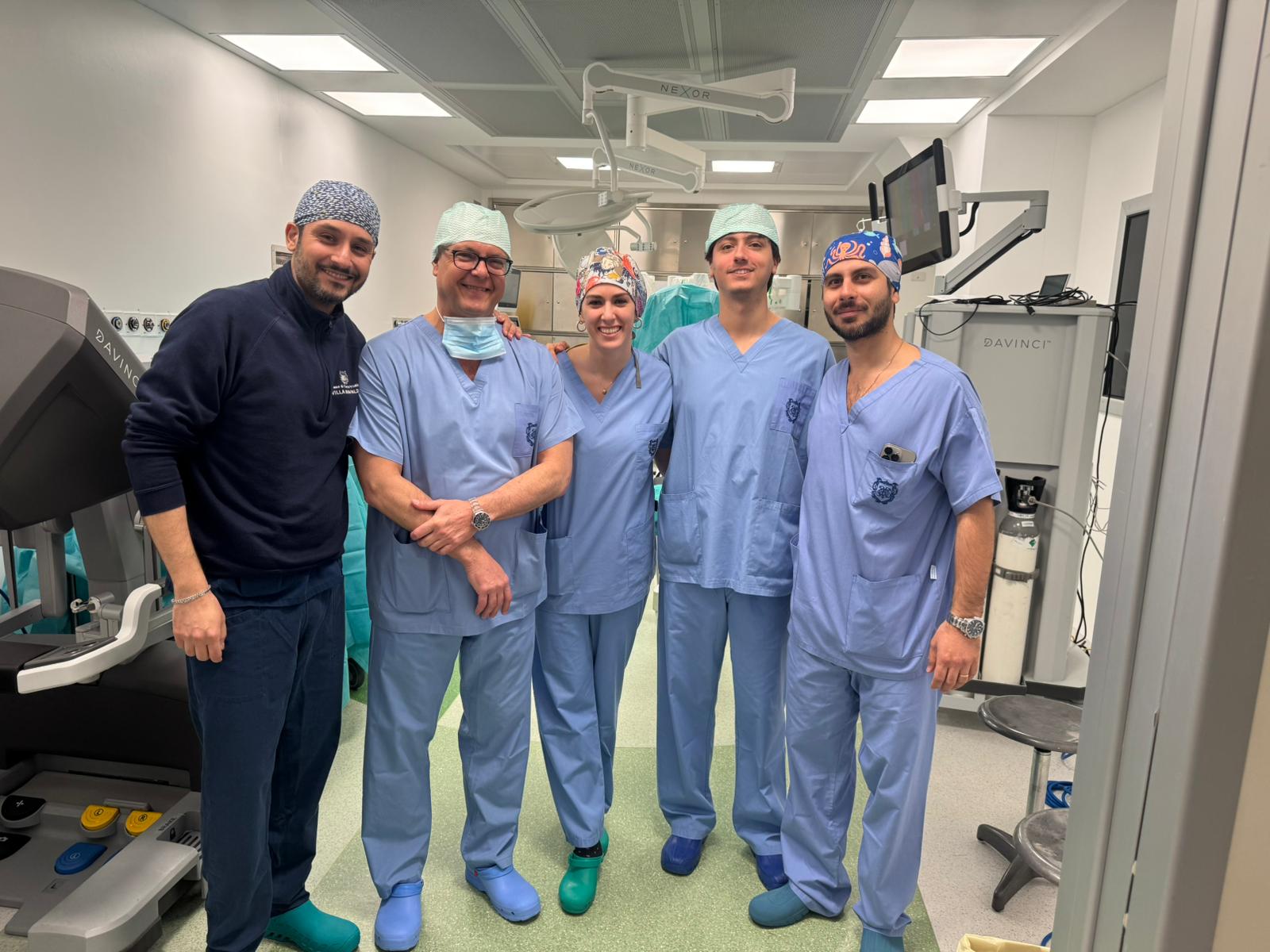
The ability to perform selected procedures as Day Surgery also depends significantly on anaesthetic management.
Our team uses protocols designed to support rapid postoperative recovery, with anaesthetic strategies suited to the type of procedure and the patient’s individual characteristics.
When appropriate, combined anaesthetic techniques and pain-relieving blocks may be used to:
The anaesthetic technique is always determined by the anaesthetist after an individual assessment.
Minimally invasive procedures suitable for Day Surgery
Inguinal and femoral hernias in Day Surgery
One particularly suitable area, in selected patients, is the treatment of inguinal and femoral hernias.
This requires:
How same-day discharge is decided
The patient’s general health
Cardiac, respiratory and metabolic conditions, together with other comorbidities, can influence the choice of admission pathway.
Type and duration of surgery
A standardised procedure of limited duration supports early recovery.
Pain control
Pain must be manageable with oral medication or otherwise compatible with recovery at home.
Recovery of essential functions
The patient must be alert, able to move around and, when required, able to eat and pass urine normally.
No immediate complications
Bleeding, persistent nausea, uncontrolled pain or other problems may make extended observation necessary.
Support at home
After discharge, patients generally need someone to accompany them and provide support during the first few hours.
After discharge
At discharge, patients receive instructions about:
Frequently asked questions
Does Day Surgery mean outpatient surgery?
Not exactly. The patient is formally admitted, undergoes surgery and is observed after the operation, but is discharged on the same day if their clinical condition allows it.
Can all minimally invasive procedures be performed as Day Surgery?
No. Laparoscopic and robotic surgery can support a rapid recovery, but same-day discharge depends on the type of procedure, the patient's condition and their postoperative progress.
Can an inguinal hernia be repaired with discharge on the same day?
Yes, in selected patients. Some inguinal hernia repairs performed using laparoscopic or robotic TAPP techniques can be scheduled as Day Surgery.
Can a femoral hernia also be treated as Day Surgery?
Yes, in selected cases. The TAPP technique can also repair a femoral defect through a minimally invasive approach.
Can I drive after a Day Surgery procedure?
Generally not in the hours immediately following anaesthesia. Someone must accompany you when you are discharged, and you should follow the instructions provided by the clinical team.
If I do not feel well after surgery, do I still have to go home?
No. Discharge only takes place when the safety criteria have been met. If necessary, observation can be extended or the patient can be admitted to hospital.
Is Day Surgery less safe than a traditional hospital stay?
Not when it is used for correctly selected patients and procedures. Safety depends on preoperative selection, anaesthetic management, the operation and postoperative monitoring.