Laparoscopic surgery allows many operations to be performed without a large abdominal incision.
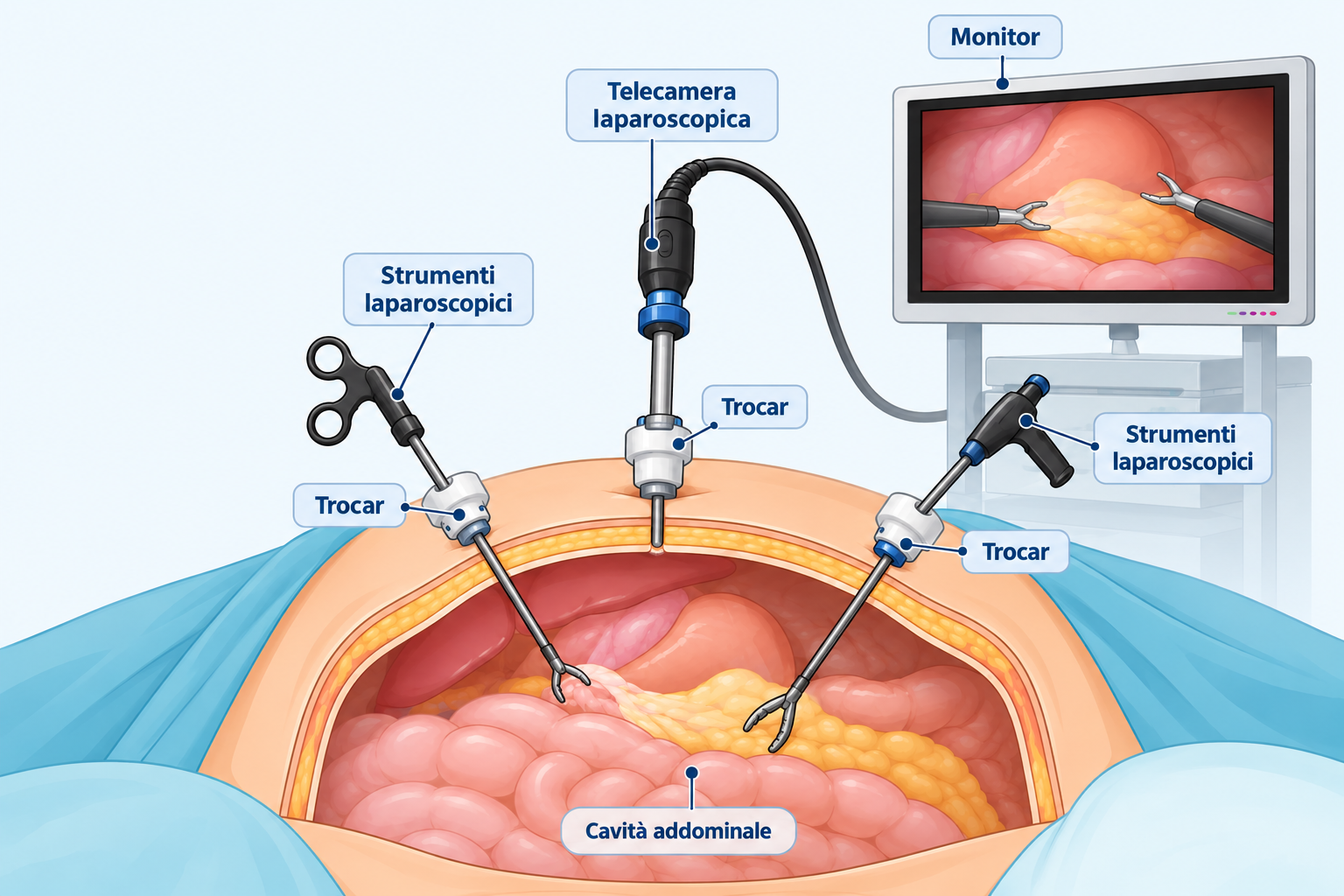
A camera and specialised surgical instruments are introduced through small skin incisions using cannulas (trocars). The surgeon operates while viewing magnified images on a monitor, with a detailed view of the anatomical structures.
The aim is not simply to reduce incision size, but to provide complete and effective treatment while limiting trauma to healthy tissues wherever possible.
Smaller surgical incisions do not mean a minor operation
Laparoscopy allows complex procedures to be performed while maintaining the same treatment and safety goals as conventional surgery.
What are the benefits of laparoscopic surgery?
Laparoscopy in abdominal wall surgery
Abdominal wall surgery is one of the fields in which the laparoscopic approach allows smaller surgical incisions to be combined with complex reconstructive procedures.
Treatment need not be limited to simply closing the hernia defect: where indicated, it may include
reconstruction of the midline,
restoration of continuity of the fascial layers
reinforcement with mesh placed in the most appropriate anatomical plane.
Which abdominal wall conditions can be treated?
Main laparoscopic techniques for the abdominal wall
A specific benefit in abdominal wall surgery
Reducing the extent of surgical wounds can be particularly useful when mesh is implanted: limiting surgical site infections is also important in reducing the risk of complications that may involve the prosthetic material.
Laparoscopic surgery of the abdominal organs
Laparoscopy allows many operations on the abdominal organs to be performed for both benign conditions and cancer, while maintaining the goals of conventional surgery.
Emergency laparoscopic surgery: prompt intervention using minimally invasive techniques too
Laparoscopy also plays an important role in emergency surgery.
Exploration of the abdominal cavity
Proceeding to treatment through small incisions
Rapid recovery
Reduction in infectious complications
Anaesthesia for laparoscopy: is intubation always necessary?
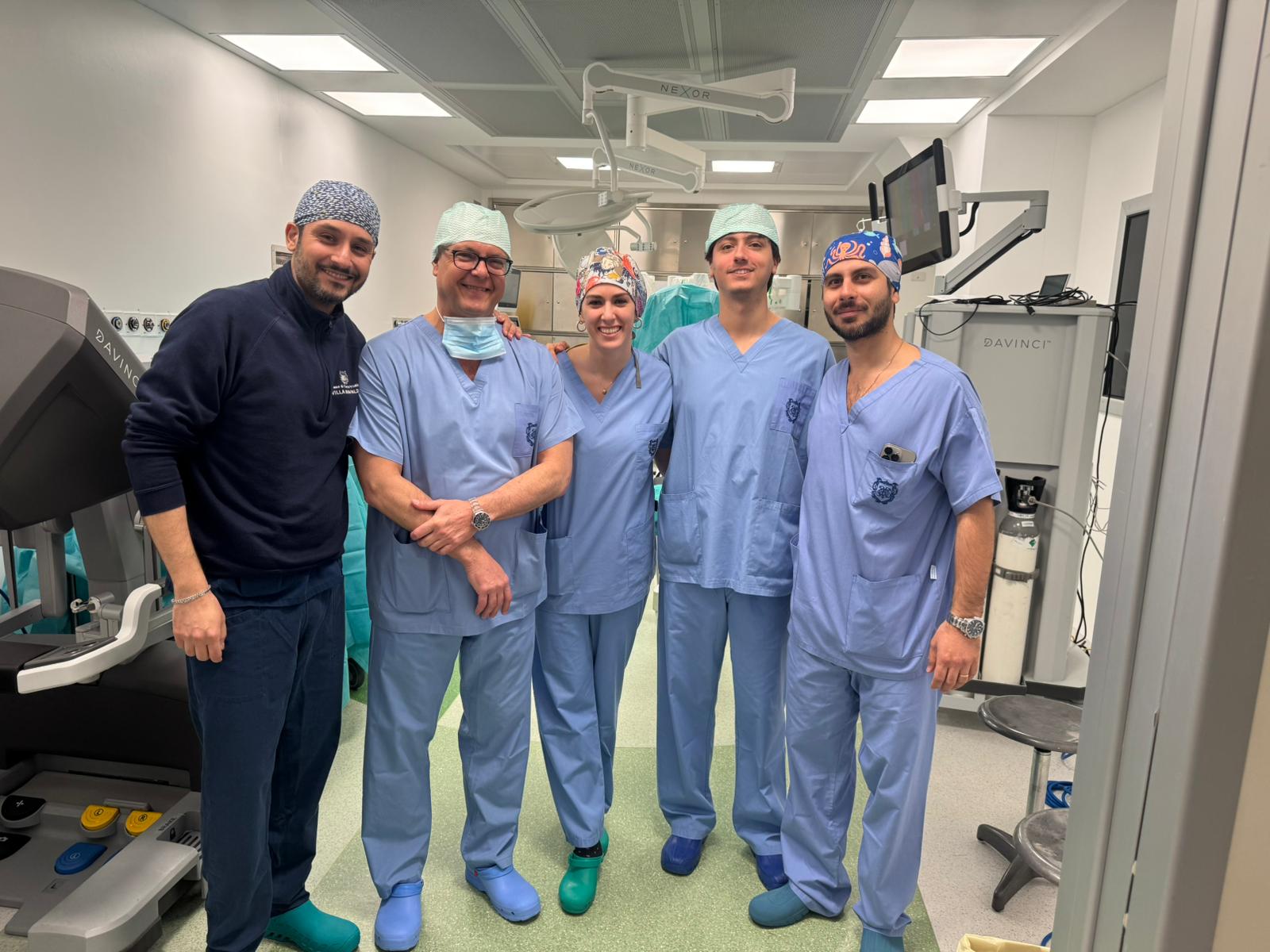
Dr Manetti's dedicated anaesthetic team provides combined general anaesthesia for laparoscopic and robotic procedures without the need for intubation.
This makes it possible to:
- Reduce the use of opioids and curare
- Reduce postoperative pain
- Reduce symptoms such as nausea, vomiting, coughing and sore throat.
Depending on the operation, the anaesthetic team may consider:
Day case or inpatient admission: how long will you stay in the clinic?
The length of stay depends on the type of operation, general health and postoperative progress.
Day surgery / same-day discharge
Selected laparoscopic procedures can be performed with same-day discharge, following an appropriate period of observation.
Short hospital stay
Many procedures require one or more nights of observation, depending on the complexity of the operation, pain control and the recovery of physiological functions.
Inpatient admission
Major cancer operations, bowel resections, complex surgery and emergencies may require a longer hospital stay.
How is the surgical approach chosen?
The choice between laparoscopy, robotic surgery and conventional surgery is made following a careful assessment of the patient.
Factors considered include
Frequently asked questions
What is the difference between laparoscopy and conventional surgery?
Laparoscopic surgery uses small access incisions through which a camera and surgical instruments are introduced. Conventional surgery generally requires a larger incision. Both have specific indications, and the choice depends on the condition.
Is laparoscopic surgery less painful?
Yes, it causes less postoperative pain because surgical access involves less trauma.
Is it possible to undergo laparoscopy without intubation?
For selected patients and procedures, anaesthetic techniques that do not require tracheal intubation may be considered. The decision rests with the anaesthetist, who considers the duration of surgery, ventilation requirements, aspiration risk and airway safety.
Can I go home on the same day after laparoscopic surgery?
Some selected procedures allow same-day discharge. Others require one or more nights in hospital, while major and emergency surgery may require longer stays.
Can laparoscopy also be used for strangulated hernias?
Yes, laparoscopy can allow the hernia to be reduced and bowel viability to be assessed.
Does laparoscopy eliminate the risk of infections and incisional hernias?
No. Smaller incisions reduce some wound complications compared with open surgery, but do not completely eliminate the risk of infections or hernias at access sites.
Is laparoscopy also indicated for colon tumours?
Yes, it can be used for many tumours of the colon and rectum. The choice must always ensure adherence to the principles of oncological surgery.