Minimally invasive techniques · Preperitoneal plane
v-TAPP and r-v-TAPP: minimally invasive midline reconstruction
v-TAPP – Ventral TransAbdominal PrePeritoneal repair – is a minimally invasive technique that reconstructs the abdominal wall midline through an intraperitoneal approach while placing the mesh in the preperitoneal plane.
As in peTEP, the goal is to restore continuity of the abdominal wall by plicating the midline and reinforcing the repair with a mesh separated from the abdominal viscera.
Indications
v-TAPP may be used in selected patients to treat:
- Rectus abdominis diastasis
- Umbilical hernias
- Epigastric hernias
- Small midline incisional hernias
- Multiple midline defects
- Spigelian hernias
- Lateral hernias
It is particularly indicated for small hernia defects, including when associated with rectus abdominis diastasis.
3 small suprapubic incisions, close to the underwear line.
How the procedure is performed
- IAccess to the abdominal cavity
Through three small suprapubic ports, the camera and surgical instruments are introduced.
Unlike peTEP, v-TAPP enters the peritoneal cavity first, and the space needed for reconstruction is prepared from within.
- IIPreparation of the preperitoneal space
The peritoneum, the thin membrane lining the inside of the abdominal cavity, is incised and separated from the abdominal wall to create a space to receive the mesh.
v-TAPP: incision and separation of the peritoneum to prepare the preperitoneal space. - IIIMidline reconstruction
The midline is reconstructed by plication, bringing the rectus muscles back together and repairing any associated hernia defects at the same time.
Reconstruction makes it possible to
- improve abdominal wall containment
- help restore the waistline.
Image from robotic peTEP surgery: example of the shared midline reconstruction step. v-TAPP: midline plication and closure of the fascial defect. - IVMesh placement
The mesh is placed in the preperitoneal space to reinforce the abdominal wall reconstruction.
The peritoneum is then closed over the mesh, separating it from the abdominal viscera.
Anatomical diagram of the preperitoneal plane (shared by peTEP and v-TAPP): the mesh remains separated from the bowel loops. v-TAPP: spreading the mesh in the preperitoneal plane before suturing the peritoneum.
Important
Access is intraperitoneal, but the mesh remains extraperitoneal.
Why place the mesh in the preperitoneal plane?
Preperitoneal placement reinforces the abdominal wall while interposing a natural anatomical barrier between the mesh and the abdominal organs.
The main advantages of the technique are:
- Mesh outside the peritoneal cavity
- No direct contact between mesh and bowel loops when peritoneal coverage is complete
- Reconstruction of the midline
- Simultaneous correction of diastasis and associated hernias
- Reduced need for traumatic mesh fixation systems
- Small suprapubic incisions
What is the difference between v-TAPP and peTEP?
Both techniques share the same reconstructive goal and have similar indications. The main difference concerns how the preperitoneal space is accessed.
- Intraperitoneal access
- Preparation of the preperitoneal space from inside the abdominal cavity
- Midline plication
- Preperitoneal mesh
- Closure of the peritoneum to protect the mesh
- Completely extraperitoneal access
- Direct preparation of the preperitoneal space
- Midline plication
- Preperitoneal mesh
The choice between the two procedures depends on abdominal wall anatomy, quality of the peritoneum, defect size and any previous surgery.
Learn more about the peTEP techniqueLaparoscopy or robotics
The technique can be performed using two different approaches:
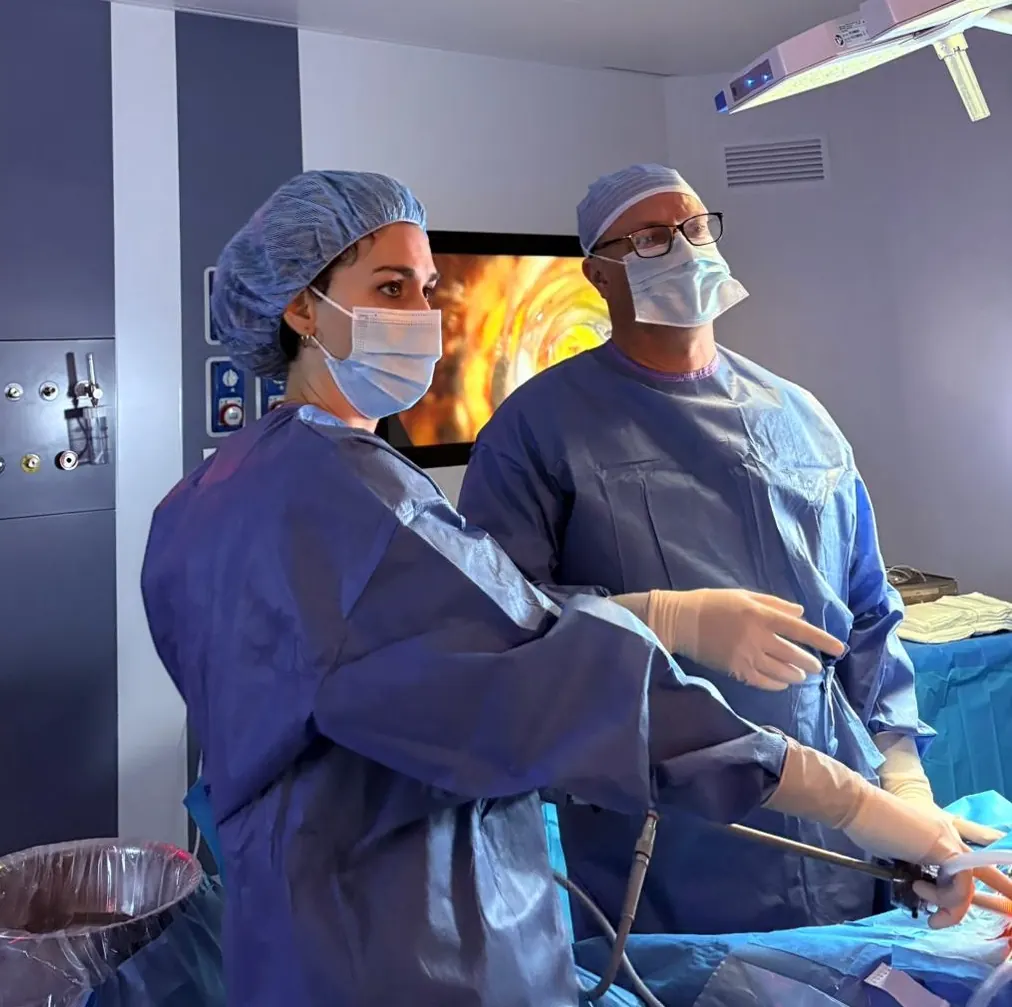
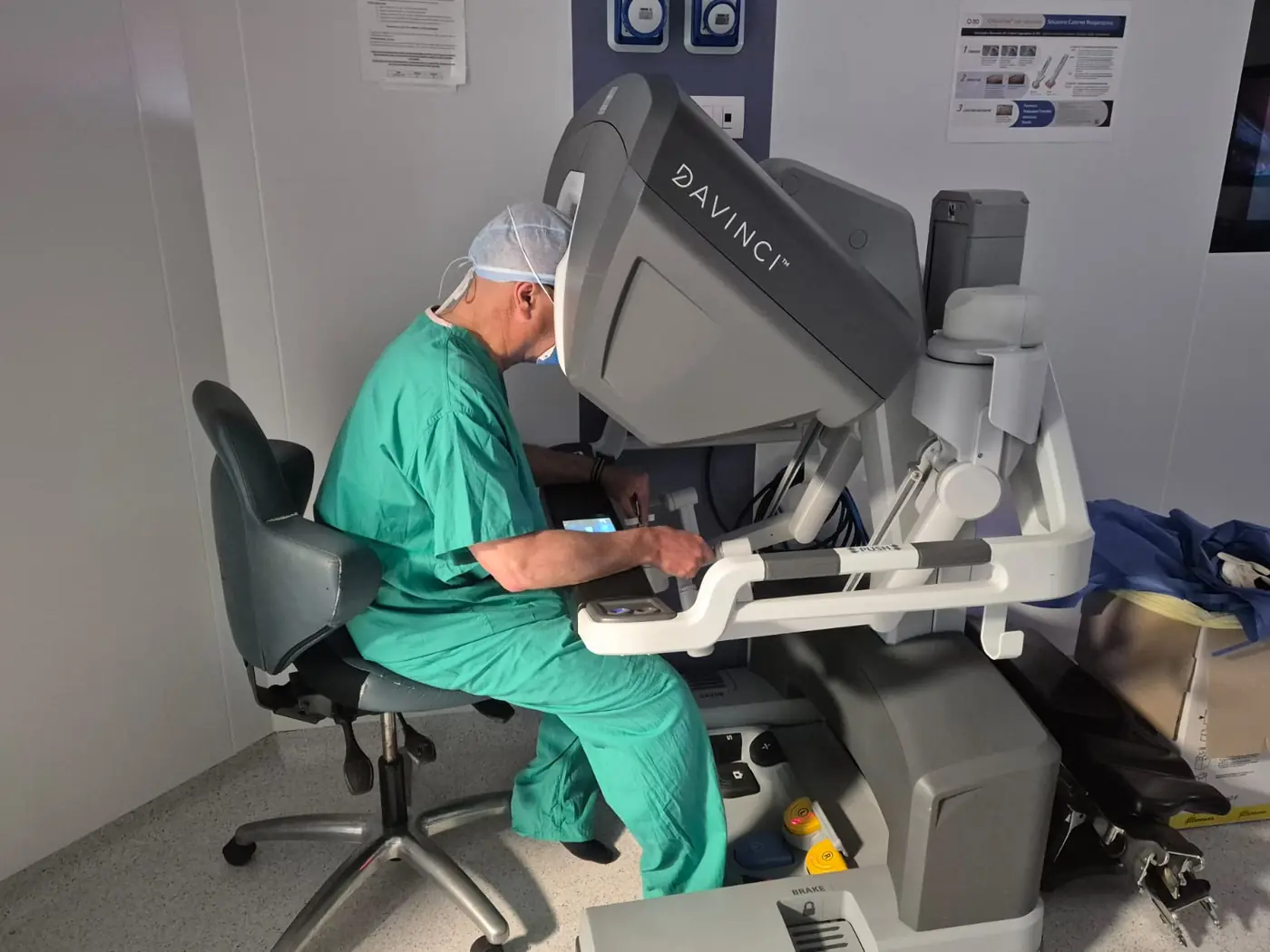
Thanks to three-dimensional vision and articulated instruments, the robotic platform can facilitate several steps of the procedure, in particular:
- 01Dissection of the preperitoneal plane
- 02Midline plication
- 03Management of delicate anatomical structures
- 04Suturing and reconstruction of the peritoneal layer
The anatomical and reconstructive principle remains the same.
Da Vinci SP: single-incision robotic surgery
Abdominal wall reconstructions through a single access point of approximately 2.5–2.7 cm.
Plastic surgery
Possible combination with plastic surgery
As with other minimally invasive abdominal wall reconstruction techniques, v-TAPP can be combined, when indicated, with plastic surgery procedures.
This combination can be useful in the presence of:
- Excess skin
- Tissue laxity
- Localised fat deposits
- Alterations of the abdominal contour
Important
Collaboration between the abdominal wall surgeon and the plastic surgeon allows functional reconstruction to be combined with aesthetic remodelling in a single surgical session.
Learn moreAesthetic remodelling of the abdominal wallTiming and hospital stay
- 3 small incisions
Suprapubic access ports
- About 2 hours
Approximate duration of surgery
- After 2 hours
Early mobilisation, according to clinical condition
- After 24 hours
Discharge generally expected
Post-operative recovery
gradual
- First hoursEarly mobilisation
- Straight awayImmediate return to normal daily activities
- ProgressiveGradual resumption of physical activity.
Not every defect requires the same technique
v-TAPP is one of the minimally invasive options for abdominal wall reconstruction with extraperitoneal mesh placement.
The most appropriate technique is chosen after a careful assessment of anatomical features, defect size and the patient's functional needs.
Frequently asked questions
Can v-TAPP correct rectus diastasis?
Yes. In selected patients, v-TAPP allows the midline to be reconstructed by plication and reinforced with a preperitoneal mesh, repairing any associated hernias at the same time.
Is the mesh placed inside the abdominal cavity?
No. Although surgical access is intraperitoneal, the mesh is placed in the preperitoneal space. The peritoneum is then closed to separate the mesh from the abdominal viscera.
What is the difference between v-TAPP and peTEP?
Both techniques reconstruct the midline and place the mesh in the preperitoneal plane. v-TAPP enters the peritoneal cavity to reach that space, whereas peTEP uses a completely extraperitoneal approach.
What is the difference between v-TAPP and IPOM?
In v-TAPP the mesh is placed in the preperitoneal plane and separated from the viscera. In the IPOM technique the mesh is placed inside the peritoneal cavity.
Where are the scars located?
The suprapubic approach uses three small incisions in the lower abdomen, close to the underwear line.
Can v-TAPP be performed robotically?
Yes. The robotic variant, known as r-v-TAPP, can facilitate dissection, midline plication and closure of the peritoneum.
How long is the hospital stay?
A single night in hospital is generally expected in the absence of complications. Recovery follows a pathway similar to the peTEP technique.